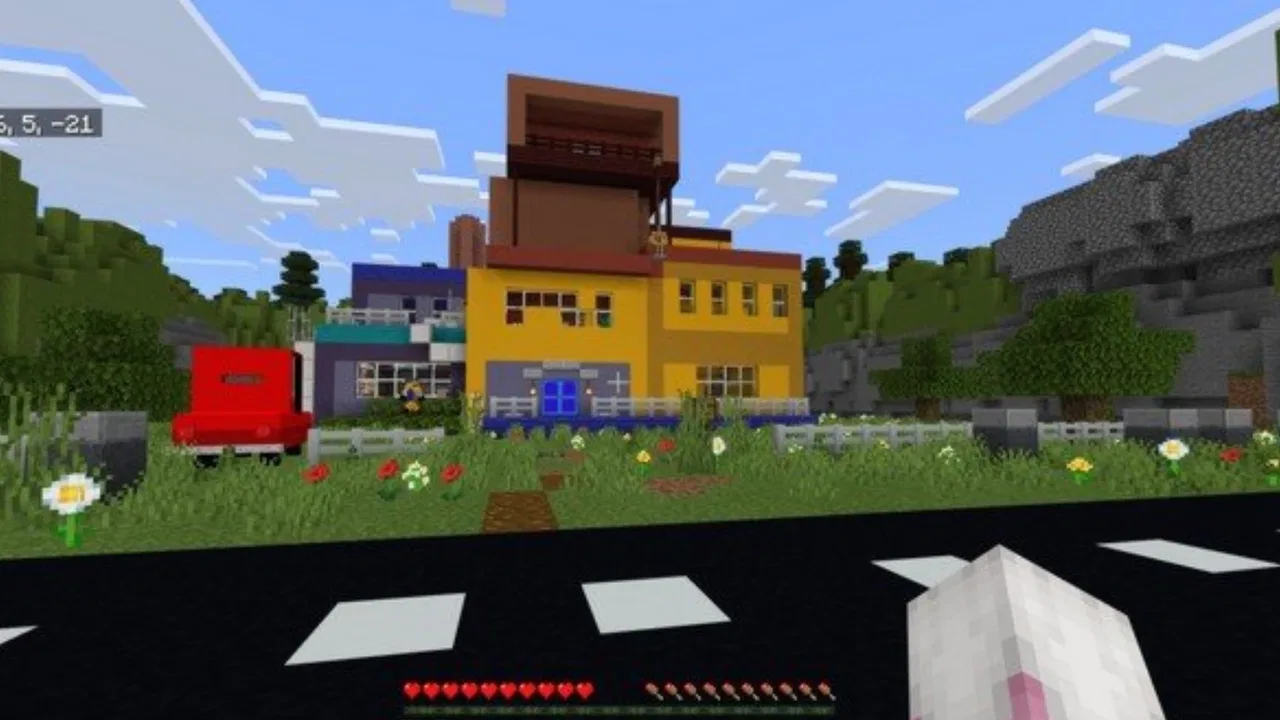
Scary Neighbor Granny for MCPE
- 4.1
- Rating
- 500.00K
- Installs
- Free
- Price

 Analysis by App-foxy
I approached Scary Neighbor Granny for MCPE as a companion app for Minecraft players who want to add a horror-themed idea to their Bedrock experience. It sits in the Libraries & Demo section rather than presenting itself as a full standalone game, and that distinction matters: the value is in what it helps you bring into Minecraft, not in replacing Minecraft itself. The store summary points to a scary neighbor and granny theme, so I treated it as something for players looking for a darker change of mood rather than a general-purpose Minecraft library.
My first impression was that the concept is easy to understand. If you already play Minecraft PE and enjoy creepy characters, the purpose is immediately more appealing than a broad collection of unrelated add-ons. The app is free, suitable for Everyone, and comes from Mine Blox Crafting. It has reached over 500 thousand installs and holds a 4.1 average from around 1.5 thousand ratings, which suggests that the idea has found a reasonably interested audience without making it a perfect fit for every player.
How the app feels to read, navigate, and understand
I find the app easiest to assess when I focus on its narrow horror theme rather than expecting a broad Minecraft resource library. That focus helps me decide quickly whether the idea suits a particular player, while the separate setup process calls for a little patience. The next section looks at how that focused concept translates into an actual Minecraft session.
You May Also Like

 Blood Strike: 2.5 Anniversary
Blood Strike’s Loadouts Turn Every Drop Into a Tactical Gamble
A close look at Blood Strike’s custom loadouts: how fast access to signature weapons reshapes its battle royale rhythm, rewards preparation, and narrows the gap between fights.

 Pandora - Music & Podcasts
Pandora’s Music Is Easy to Start, but Harder to Recover
Pandora’s strength is its low-effort path from a seed to a station. Its weak spot is how much confidence it asks you to place in connection, setup, and quiet recovery.

 8 Ball Pool
 Is Built on Rivalries, Rematches, and Routine
A close look at the rivalries, rematches, shared routines, and unanswered safety questions that turn a quick pool match into a persistent mobile community.

 Samsung Music
’s Quiet Strength Is Playing What You Already Own
Its reach comes less from spectacle than from dependable access to a personal library. That simplicity is both the app’s strongest retention engine and its ceiling.

 AccuWeather: Weather Radar
AccuWeather Review: A Quick, Clear Forecast for Everyday Decisions
For everyday plans, the best forecast is the one you can understand quickly. AccuWeather makes rain timing, radar, and local conditions easy to act on, with a few trade-offs.

 Hill Climb Racing
Why Hill Climb Racing Still Turns Crashes Into One More Run
A tiny car, a bumpy hill and one more upgrade: Hill Climb Racing keeps resurfacing because its simple chaos makes every near-miss feel personal.
More From Our News Desk



A focused theme is easier to approach
The strongest usability choice here is the narrow theme. Instead of asking me to understand a large catalog of Minecraft material, the app presents a recognizable horror direction. That helps younger players, occasional Minecraft users, and anyone who does not want to compare dozens of unrelated options. The phrase “Scary Neighbor Granny” communicates the mood quickly, even before I spend time deciding whether I want it in my world.
That clarity is useful for people who process information better when the purpose is concrete. A player who wants a spooky session can make a decision quickly, while a parent checking whether the content is appropriate for a child has an obvious theme to consider. The Everyone age classification is reassuring in a general sense, but I would still make the final decision based on the individual child’s reaction to horror characters. An age label cannot tell me whether a particular player finds the atmosphere exciting or genuinely upsetting.
I also appreciate that the app is not framed as a replacement for Minecraft. That reduces one common source of confusion: expecting a small companion download to behave like the main game. The useful mental model is “prepare or explore a themed Minecraft experience,” not “install another complete block-building game.” Keeping that distinction in mind makes the app easier to judge fairly.
Reading comfort depends on the surrounding setup
For someone with ordinary vision and a familiar phone, the basic concept should be approachable. The more important question is what happens when the user needs larger text, stronger contrast, or less visual clutter. I would not assume that every screen is equally comfortable for every reader. On a small display, themed artwork and promotional elements can compete with the information a user actually needs, especially if the person is already tired or has difficulty tracking compact text.
My practical advice is to use the app when you have enough time to pause and read rather than trying to rush through it before a gaming session. If a child is using it, I would sit nearby for the first attempt and explain the difference between the app and Minecraft. That simple step prevents the child from becoming frustrated if the expected content does not appear inside the main game automatically.
For users who rely on screen magnification, device-level text enlargement may help with reading, but it can also make navigation less convenient by showing less content at once. I would test the app with the phone’s usual display settings before changing everything for one download. If the interface becomes difficult to follow, the problem may not be the theme itself but the amount of information visible on a small screen.
Navigation is best handled as a deliberate workflow
I found that the safest way to approach an app like this is to separate discovery from play. First, identify what the app is offering and what Minecraft version or edition it is intended to work with. Then, read any instructions carefully and only afterward open Minecraft to look for the result. This two-stage workflow is more reliable than tapping quickly and assuming that a download or selection has completed.
That is also a useful strategy for people with attention difficulties. Rather than trying to remember several steps, I would keep the process simple: choose the scary theme, check the instructions, complete the transfer or setup, and verify the result in Minecraft. If something does not appear, return to the app and review the directions instead of repeatedly restarting the game. The app’s current version is 1.20, so I would pay close attention to compatibility wording before relying on it for an important world.
One non-obvious trade-off is that a themed companion app can feel simple at first but still create uncertainty at the handoff point between the app and Minecraft. That handoff is where I would expect the most user questions: whether the content has been saved, where it should appear, and whether a new world is needed. Reading before tapping is not exciting, but it saves time and reduces avoidable mistakes.
Motor and sensory considerations during use
Touch interaction can be manageable for many players, but the experience may be less comfortable for someone with tremors, limited dexterity, or difficulty making precise taps. Horror-themed content can also encourage hurried decisions: a user may rush because the subject feels urgent or because they are eager to start playing. I recommend slowing down during setup and using the phone in a stable position rather than holding it one-handed while moving between screens.
A stylus or a larger device may make selection easier for a user who struggles with small touch targets. Voice control built into the phone could assist with general device navigation, although I would not assume that every control inside the app responds perfectly to voice commands. The most dependable approach is to combine the phone’s normal accessibility settings with a calm, step-by-step workflow.
Sensory comfort deserves equal attention. The granny and neighbor theme is designed to feel scary, so it may not suit someone who is sensitive to threatening imagery or who dislikes sudden changes in mood. I would avoid introducing it during bedtime, especially for a young player who already has trouble settling down. In a shared room, headphones may help avoid disturbing others, but they can also make a child feel more isolated from the adult supervising the session. For younger users, playing with the sound kept low and an adult nearby is the better compromise.
The app can work well for a player who enjoys controlled suspense but less well for someone who needs a calm, predictable visual environment. That is not a technical failure; it is a fit issue created by the central theme. A peaceful building library, texture collection, or ordinary Minecraft reference tool would be a better choice for users who want creativity without horror.
Situational access: when it fits into daily use
The most realistic use case is a short preparation session before friends join a Minecraft world. One player can explore the themed option, check the setup instructions, and decide whether the group wants a darker challenge. This works particularly well when everyone already understands Minecraft and only needs a fresh atmosphere. It is less suitable when the group expects instant multiplayer action and nobody has time to troubleshoot the transition from the app to the game.
Another useful situation is a parent and child exploring the idea together. The child can choose the horror theme, while the parent checks the age classification, explains that the app is not Minecraft itself, and decides whether the mood is appropriate. This shared approach also helps a child who reads slowly or becomes anxious when an unfamiliar interface does not behave exactly as expected.
For a commuter or someone using an older phone, the app’s minimum operating-system requirement is Android 5.1, which makes it potentially relevant to devices that are not running a recent Android release. That does not guarantee an equally smooth experience on every handset, so I would still leave room for differences in screen size and performance. If the phone is already struggling with Minecraft, adding another step to the setup process may be more trouble than it is worth.
The free price lowers the risk of trying it, especially for a player who is curious about the theme but unsure whether it will become part of a regular Minecraft routine. I would still treat the first session as a test rather than planning an elaborate world around it. If the setup works comfortably and the horror style suits the group, it can become a useful change of pace. If not, little is lost by moving back to the standard Minecraft experience.
Where the app is less inclusive or less convenient
The biggest barrier is not the idea; it is the dependence on a separate Minecraft workflow. A user who expects a single tap to produce a complete, immediately playable experience may be disappointed. Companion apps ask the player to understand two environments, and that can be difficult for people with memory challenges, limited reading confidence, or very little patience for technical steps.
Another limitation is the narrow emotional range. The app is built around a scary neighbor and granny concept, so it is not a flexible resource for every Minecraft session. It may be a poor choice for classrooms that need neutral content, families with very young children, or players who want building inspiration without an intimidating atmosphere. In those cases, a general Minecraft library or a calmer creative add-on is the more sensible alternative.
I would also avoid judging it solely by its rating. A 4.1 average is encouraging, but it cannot tell me whether the app suits my phone, my reading needs, or my tolerance for horror. The fact that there are around nine reviews displayed alongside the ratings makes the written feedback less useful as a complete picture than the broader rating count. I would use the rating as a reason to investigate, not as proof that the experience will be effortless.
Version 1.20 is another reason to check the setup details carefully. Minecraft content can be sensitive to edition and version differences, and a user who skips compatibility instructions may blame the app for a problem caused by the game environment. My practical recommendation is to test the content in a new or unimportant world first. That protects a favorite build from becoming part of an experiment and gives the player a clean way to undo the setup if the result is not what they expected.
Who should try it, and who should choose something else
I would recommend it to Minecraft PE players who specifically want a spooky theme and are comfortable following setup instructions. It is also a reasonable pick for friends looking for a horror-flavored twist on a familiar game, provided everyone understands that the app supports the Minecraft experience rather than replacing it. The free price makes it suitable for cautious experimentation, and the Everyone classification makes it easier to consider in a family setting, with the usual judgment about individual sensitivity.
I would skip it if my main goal were a broad reference library, a peaceful creative tool, or a polished standalone horror game. The app’s identity is too specific for those needs. I would also choose another option if I needed highly predictable navigation, extensive accessibility controls, or a completely documented workflow for a group that cannot spare time for trial and error. In that situation, a familiar Minecraft feature or a simpler resource with fewer handoff steps would be more dependable.
For users with visual, motor, or sensory needs, I would not make a blanket promise that it will be comfortable. Instead, I would start with device settings already known to work, use a larger screen if available, keep the first session short, and involve a trusted person during setup. Those steps do not change the app, but they can make the experience more manageable and reveal quickly whether the theme and navigation are a good personal fit.
My inclusive verdict after using it
Scary Neighbor Granny for MCPE is a focused, free companion app for Minecraft players who want a creepy neighbor-and-granny direction rather than another ordinary building session. Its clearest strength is the direct concept: the intended mood is easy to understand, and the app can be approached without committing money. Its main weakness is the practical gap between discovering the content and getting it working comfortably in Minecraft, especially for users who need simple instructions or dislike troubleshooting.
I see it as most successful when used intentionally: choose a suitable time, read the setup steps, test the result in a separate world, and consider the sensory needs of everyone playing. That workflow also makes the app more inclusive because it gives users room to adjust the phone, the volume, the supervision, and the pace instead of treating every player as if they interacts with horror content in the same way.
Mine Blox Crafting has made a narrowly defined choice rather than trying to serve every Minecraft fan. For me, that is both the appeal and the limitation. If you want a scary change of atmosphere and already know your way around Minecraft PE, it is worth trying. If you need a calm, universally comfortable, or completely effortless resource, I would look elsewhere. The right reason to install it is not popularity alone, but a clear interest in this specific horror theme and a willingness to take the setup one careful step at a time.
FAQs for Scary Neighbor Granny for MCPE
01What is Scary Neighbor Granny for MCPE?
Scary Neighbor Granny for MCPE is an immersive horror game mod for Minecraft Pocket Edition that places players in a thrilling environment where they must navigate through a spooky house and solve puzzles to escape. The game combines elements of horror and strategy, providing an engaging experience for those who enjoy a good scare within the Minecraft universe.
02Is Scary Neighbor Granny for MCPE safe to download and play?
Yes, Scary Neighbor Granny for MCPE is generally safe to download and play, provided you source it from a reputable platform or link. As with any mod, it's crucial to ensure your device's security by downloading from trusted websites. Always check user reviews and ratings to ensure the mod does not contain any malicious software.
03Can I play Scary Neighbor Granny for MCPE without an internet connection?
Once downloaded and installed, Scary Neighbor Granny for MCPE can be played offline. However, an internet connection is required for the initial download and for any updates or additional content. Playing offline means you won't have access to any online multiplayer features, if available.
04What are the system requirements for Scary Neighbor Granny for MCPE?
To run Scary Neighbor Granny for MCPE smoothly, you will need a device that supports Minecraft Pocket Edition. Generally, this means having a device with at least 1GB of RAM and a compatible version of Android or iOS. It's advisable to have some extra storage space for the mod and any future updates.
05Are there any in-app purchases in Scary Neighbor Granny for MCPE?
Scary Neighbor Granny for MCPE might offer in-app purchases, depending on the version. These could include additional features, skins, or enhancements to improve gameplay. It's important to check the app's description on the download page and manage in-app purchase settings on your device if you want to control spending.
Pros
- Engaging horror-themed gameplay.
- Easy to install and set up.
- Regular updates with new content.
- Compatible with most devices.
- Supports multiplayer mode.
Cons
- Contains frequent ads.
- Limited free content options.
- In-app purchases can be pricey.
- Graphics could be more detailed.
- Sound effects may become repetitive.

Scary Neighbor Granny for MCPE
Gallery